Time Conversion & Physics
How Many Milliseconds Are in a Second? Complete Guide
The exact mathematics of fractions of a second: 1,000 milliseconds, centiseconds vs thousandths, conversion charts, and display refresh limits.
The fundamental mathematical answer is simple: there are exactly 1,000 milliseconds in one second.
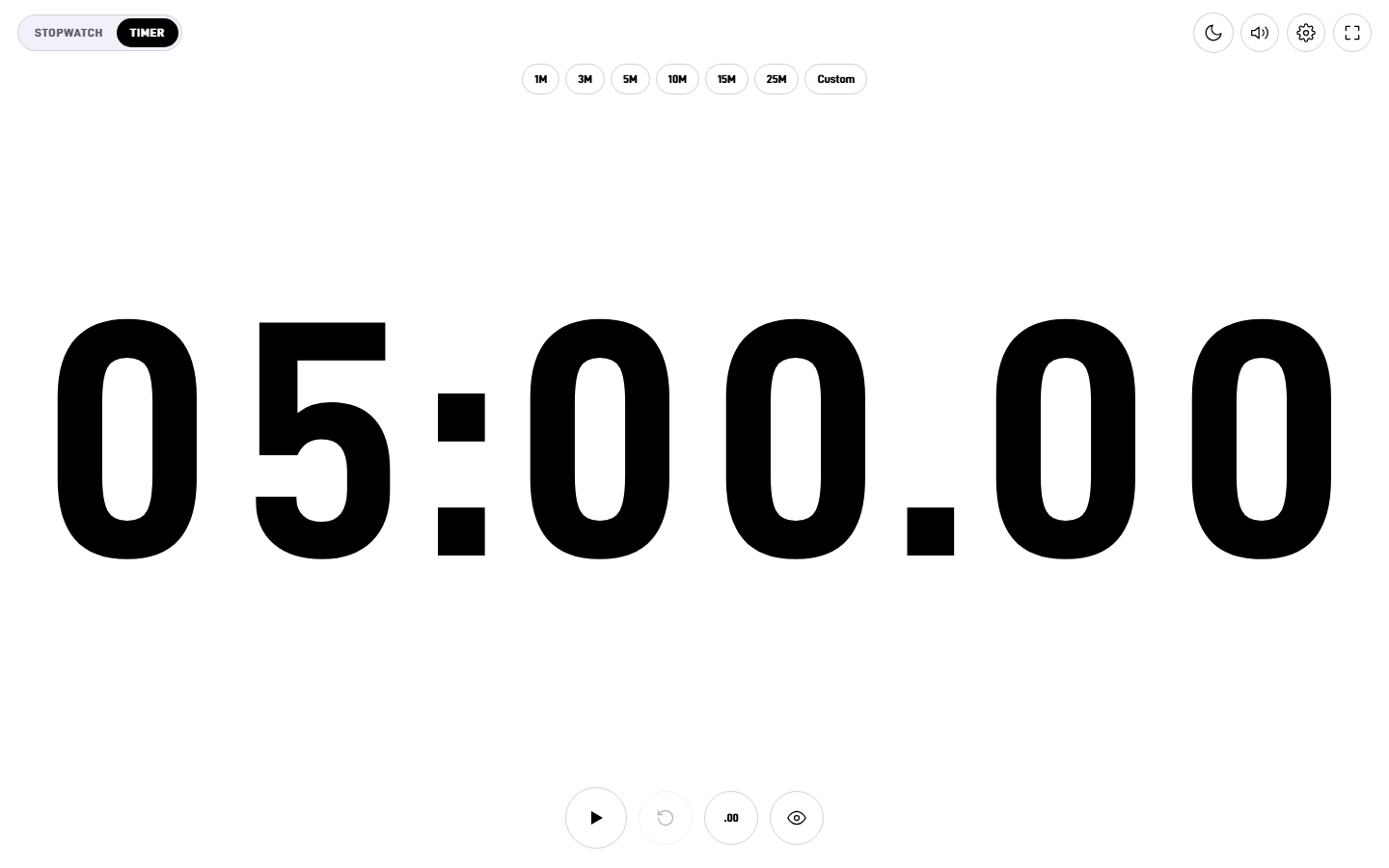
However, when using an online stopwatch with milliseconds, people often wonder why the display shows two digits after the decimal point (e.g. 00:12.34) rather than three digits. In this guide, we explore the difference between milliseconds and centiseconds, examine how computers calculate sub-second intervals, and provide a quick-reference conversion chart.
1. The Mathematics: SI Prefix "Milli-"
In the International System of Units (SI), the prefix milli- denotes one-thousandth (10-3 or 0.001) of the base unit. Therefore:
To convert seconds to milliseconds, simply multiply by 1,000. To convert milliseconds back to seconds, divide by 1,000:
- Seconds to Milliseconds: 2.5 s × 1,000 = 2,500 ms
- Milliseconds to Seconds: 750 ms ÷ 1,000 = 0.75 s
- Minutes to Milliseconds: 1 min = 60 s × 1,000 = 60,000 ms
- Hours to Milliseconds: 1 hr = 3,600 s × 1,000 = 3,600,000 ms
2. Conversion Cheat Sheet
| Fraction / Unit | Seconds (s) | Milliseconds (ms) | Real-World Benchmark |
|---|---|---|---|
| 1 Thousandth | 0.001 s | 1 ms | Camera shutter high speed; F1 photo-finish timing |
| 1 Hundredth (Centisecond) | 0.01 s | 10 ms | Single tick on a 2-decimal digital stopwatch |
| 1 Tenth (Decisecond) | 0.1 s | 100 ms | Fastest human auditory reaction limit; human blink starts |
| Quarter Second | 0.25 s | 250 ms | Average human visual reaction time |
| Half Second | 0.5 s | 500 ms | Typical duration of an eye blink cycle |
| 1 Full Second | 1.0 s | 1,000 ms | One resting human heartbeat (~60 BPM) |
3. Why Do Stopwatches Display Hundredths Instead of Thousandths?
If a second contains 1,000 milliseconds, why do standard sports stopwatches (from Seiko handheld timers to the iPhone Clock app and Fullscreen Stopwatch) show two decimal places (.00) instead of three (.000)?
The reason is human physiology and display refresh limits:
- Display Refresh Rates (60Hz to 120Hz): Standard computer monitors and smartphones update the screen 60 or 120 times per second. Rendering 1,000 state changes per second is physically impossible on a standard screen; numbers would skip frames and flicker violently.
- Flicker Fusion & Persistence of Vision: The human eye cannot resolve visual changes faster than approximately 50 to 60 Hertz. A 3-digit thousandths column spins so quickly that human observers perceive only a gray blur.
- Centisecond Practicality: Two digits represent centiseconds (hundredths of a second, or 10ms increments). This balances precise sub-second timing with optical legibility.
On Fullscreen Stopwatch, you can toggle between hundredths (.00), tenths (.0), or whole seconds (0) from the display settings, with fixed-width anti-jitter slots ensuring stable presentation at all times.
Related Stopwatch Guides
Explore more in-depth guides to maximize your timing precision:
Fills the screen. Readable from six metres.